Welcome to Magazine Science

Health, Medicine and Human Sciences Magazine

Biology

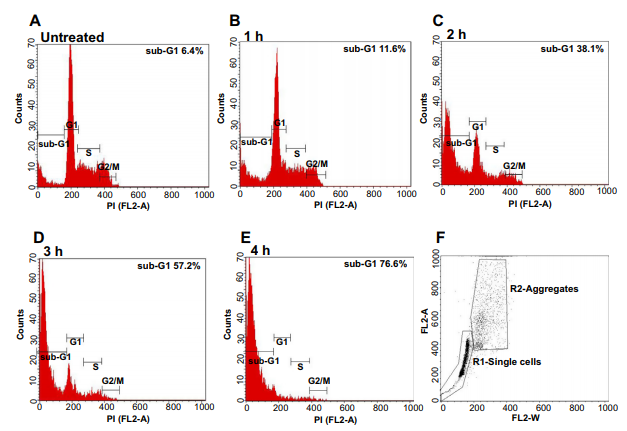
Measuring Apoptosis by Flow Cytometry

Mitochondria are double-membraned organelles believed to have been integrated into modern eukaryotes via symbiosis of proteobacteria into an anaerobic pre-eukaryotic (host) cell 1.5–2 billion years ago. According to modern thinking (pioneered by Mitchell;), an essential role of mitochondria is to produce ATP via oxidative phosphorylation (OXPHOS). In this process, the chemical energy stored in nutrients… read more »

List of Top foods rich in Antioxidants

The majority of living beings need oxygen to ensure their existence while oxygen can produce free radicals that are also called reactive oxygen species (ROS, for reactive oxygen species) toxic to the integrity of the body cells.  organisms have a system of antioxidants and enzymes that work together to prevent damage to cell components such… read more »

The Strange world of Bionanomachines

Very remarkably, many of nanomachines will always perform their functions automatically, after they are isolated and purified, provided the environment is not too hard. They must not be sequestered inside the cells in the pure state. Each of them constitutes a self-sufficient molecular machine. Natural digestive enzymes such as pepsin and lysozyme are so hard… read more »

Replication Cycle of Viruses

With all their different genomic structures, forms, and sizes, viruses basically have a relatively simple replication cycle. While only the genome of a bacteriophage enters a bacterium, the complete virus (genome and capsid) enters a eukaryotic cell. General sequence of the replication cycle of a virus in a cell The replication cycle of a virus… read more »

Viruses

Viruses are important pathogens in plants and animals, including man. The complete infectious viral particle is called a virion. Its genome carries a limited amount of genetic information, and it can replicate only in host cells. From analysis of the structure and expression of viral genes, fundamental biological processes such as DNA replication, transcription regulation,… read more »

DNA Transfer between Cells

Transfer of DNA occurs not only by fusion of gametes in sexual reproduction but also between other cells of prokaryotic and eukaryotic organisms (conjugation of bacteria, transduction between bacteriophages and bacteria, transformation by plasmids in bacteria, transfection in cultures of eukaryotic cells). Cells altered genetically by taking up DNA are said to be transformed. The… read more »

Bacteriophages

The discovery of bacterial viruses (bacteriophages or phages) in 1941 opened a new era in the study of the genetics of prokaryotic organisms. Although they were disappointing in the original hope that they could be used to fight bacterial infections, phages served during the 1950s as vehicles for genetic analysis of bacteria. Unlike viruses that… read more »

Recombination in Bacteria

In 1946, J. Lederberg and E. L. Tatum first demonstrated that genetic information can be exchanged between different mutant bacterial strains. This corresponds to a type of sexuality and leads to genetic recombination. A. Genetic recombination in bacteria In their classic experiment, Lederberg and Tatum used two different auxotrophic bacterial strains. One (A) was auxotrophic… read more »

Isolation of Mutant Bacteria

Important advances in genetics were made in the early 1950s through studies of bacteria. As prokaryotic organisms, bacteria have certain advantages over eukaryotic organisms because they are haploid and have an extremely short generation time. Mutant bacteria can be identified easily. The growth of some mutant bacteria depends on whether a certain substance is present… read more »

Xeroderma Pigmentosum

Xeroderma pigmentosum (XP) is a heterogeneous group of genetically determined skin disorders due to unusual sensitivity to ultraviolet light. They are manifested by dryness and pigmentation of the exposed regions of skin (xeroderma pigmentosum=“dry, pigmented skin”). The exposed areas of skin also show a tendency to develop tumors. The causes are different genetic defects of… read more »

Sidebar