Welcome to Magazine Science

Health, Medicine and Human Sciences Magazine

Biology

DNA Repair

Life would not be possible without the ability to repair damaged DNA. Since replication errors, including mismatch, and harmful exogenous factors are everyday problems for a living organism, a broad repertoire of repair genes has evolved in prokaryotes and eukaryotes. The following types of DNA repair can be distinguished by their basic mechanisms: (1) excision… read more »
Trinucleotide Repeat Expansion

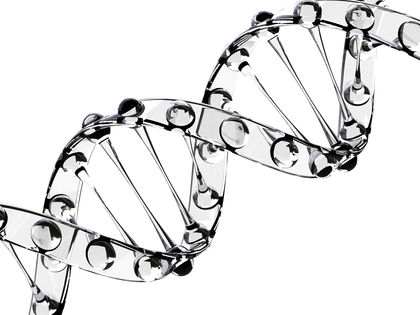
The human genome contains tandem repeats of trinucleotides. Normally they occur in groups of 5–35 repeats. When their number exceeds a certain threshold and they occur in a gene or close to it, they cause diseases. Once the normal, variable length has expanded, the increased number of repeats tends to increase even further when passed… read more »

Transposition

Aside from homologous recombination, the overall stability of the genome is interrupted by mobile sequences called transposable elements or transposons. There are different classes of distinct DNA sequences that are able to transport themselves to other locations within the genome. This process utilizes recombination but does not result in an exchange. Rather, a transposon moves… read more »

At-Home Anemia Test (60 seconds)

Anemia is usually defined as a decrease in the total amount of red blood cells (RBCs) or hemoglobin in the blood. It can also be defined as a lowered ability of the blood to carry oxygen. Iron-deficiency anemia, also spelled iron-deficiency anaemia, is anemia caused by a lack of iron. Accurate Diagnosis Within 60 Seconds, At Low… read more »

Recombination

Recombination lends the genome flexibility. Without genetic recombination, the genes on each individual chromosome would remain fixed in their particular position. Changes could occur by mutation only, which would be hazardous. Recombination provides the means to achieve extensive restructuring, eliminate unfavorable mutation, maintain and spread favorable mutations, and endow each individual with a unique set… read more »

DNA Polymorphism

Genetic polymorphism is the existence of variants with respect to a gene locus (alleles), a chromosome structure(e.g., sizeofcentromeric heterochromatin), a gene product (variants in enzymatic activity or binding affinity), or a phenotype. The term DNA polymorphism refers to a wide range of variations in nucleotide base composition, length of nucleotide repeats, or single nucleotide variants…. read more »

Mutation Due to Different Base Modifications

Mutations can result from chemical or physical events that lead to base modification. When they affect the base-pairing pattern, they interfere with replication or transcription. Chemical substancees able to induce such changes are called mutagens. Mutagens cause mutations in different ways. Spontaneous oxidation, hydrolysis, uncontrolled methylation, alkylation, and ultraviolet irradiation result in alterations that modify nucleotide bases…. read more »

Changes in DNA (Mutations)

When it was recognized that changes (mutations) in genes occur spontaneously (T. H. Morgan, 1910) and can be induced by X-rays (H. J. Muller, 1927), the mutation theory of heredity became a cornerstone of early genetics. Genes were defined as mutable units, but the question what genes and mutations are remained. Today we know that… read more »

Turmeric: a Natural Antidepressant more effective than Prozac

According to a recent clinical study published in the journal “Phytotherapy Research”, it has been proven that this spice offers incredible health benefits. We already knew that turmeric had anti-inflammatory and anti-carcinogenic properties, but we had not yet been able to demonstrate its effects on the mind and behavior. This research proved that this root… read more »

DNA Amplification by Polymerase Chain Reaction (PCR)

The introduction of cell-free methods for multiplying DNA fragments of defined origin (DNA amplification) in 1985 ushered in a new era in molecular genetics (the principle of PCR is contained in earlier publications). This fundamental technology has spread dramatically with the development of automated equipment used in basic and applied research. Polymerase chain reaction (PCR)… read more »

Sidebar